Goat leather: from Alran's know-how to Marcel Robert cases
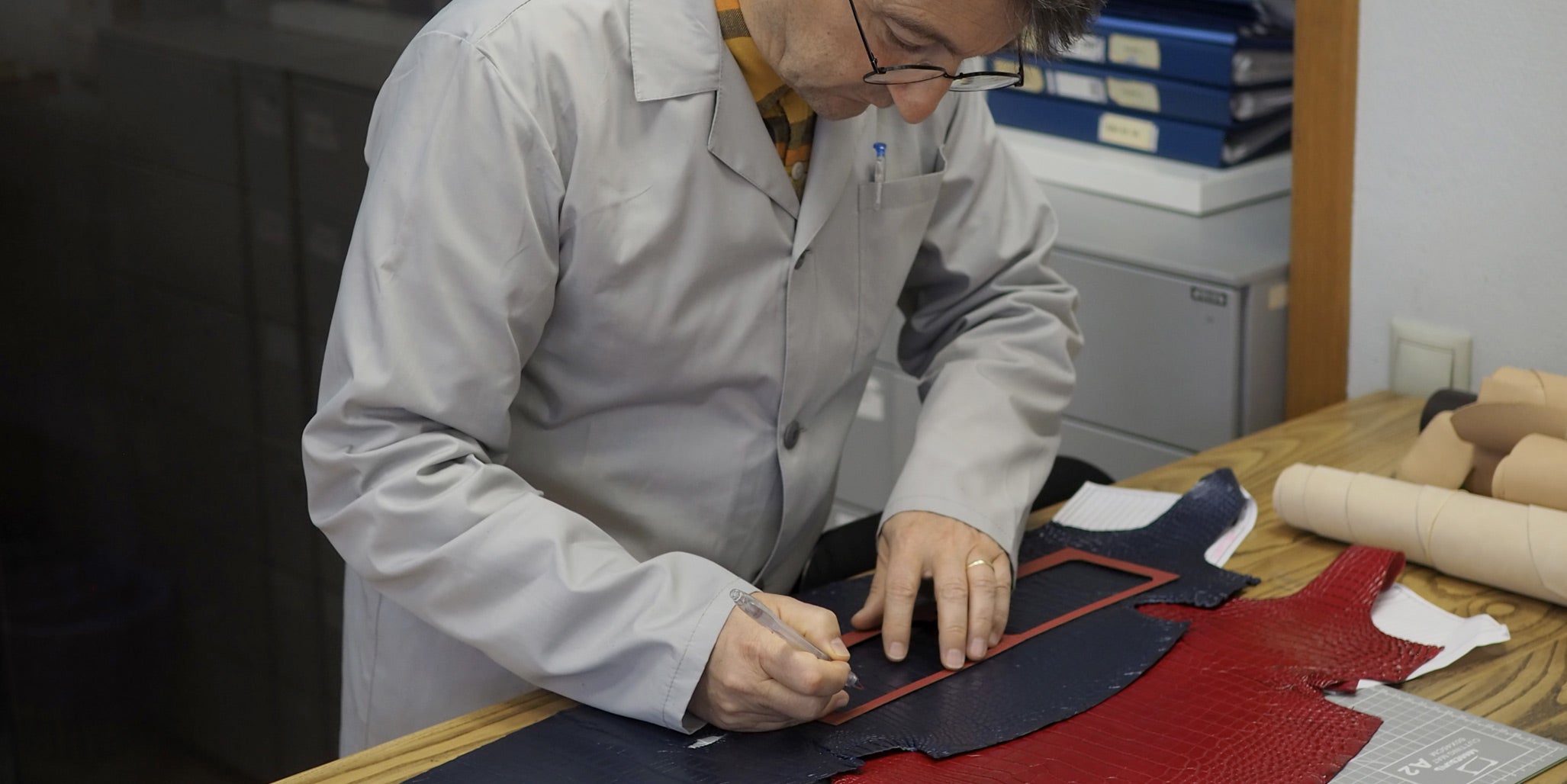
From the work on the skin at the Alran mégisserie in Mazamet to its transformation in our atelier, goat leather passes through the hands of specialists with complementary trades. Here is why we chose Sully leather, and how we prepare it to make our smartphone cases.
Goat leather: a particular material in leather goods
Not all leathers behave the same way. And two fine hides are not necessarily suited to the same product.
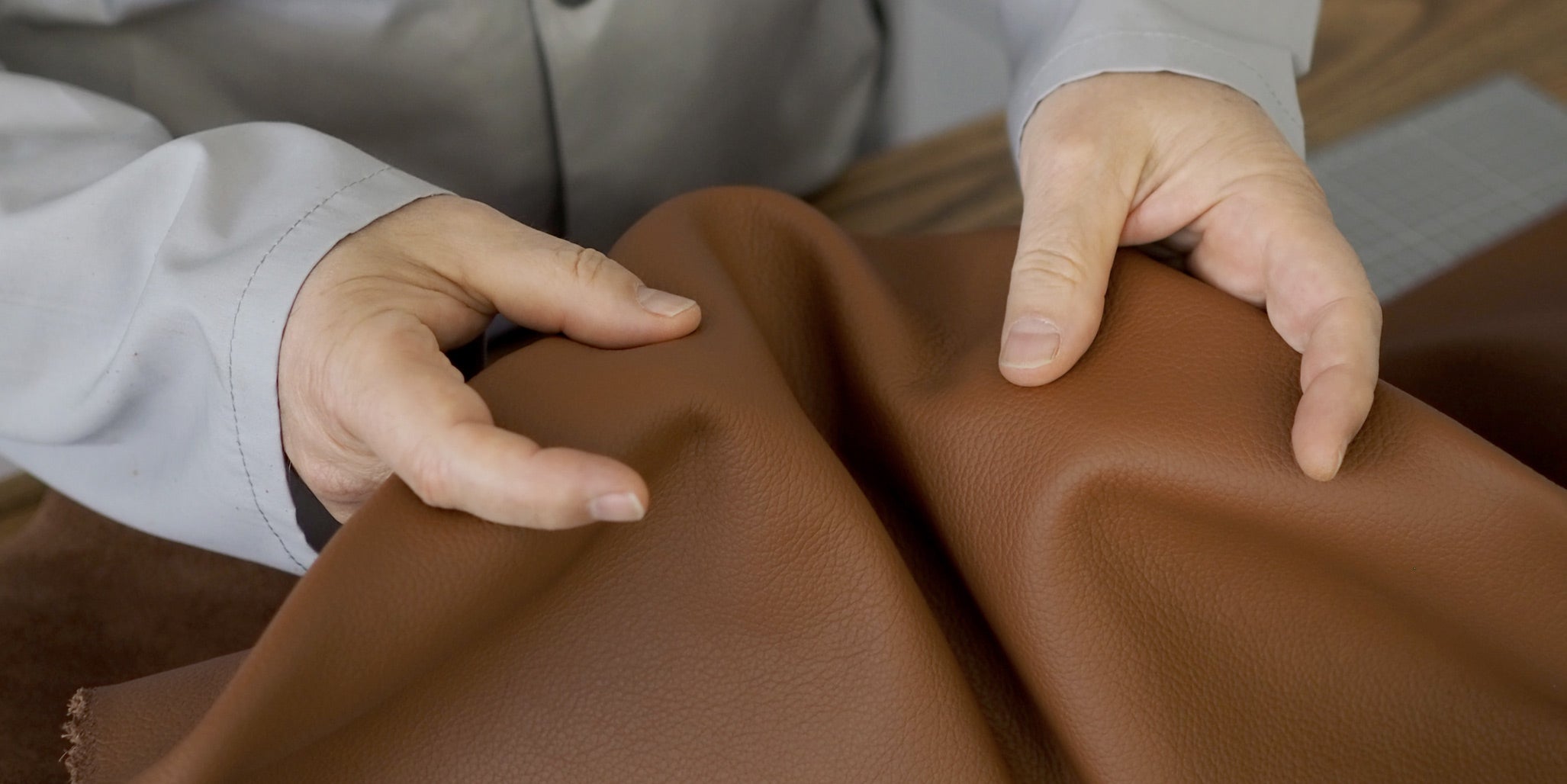
In leather goods, goat leather is valued for its distinctive grain, its strength and its body. Its fibre structure gives it a certain liveliness: a useful quality when you want a material that is thin and supple to work, but that should not deform easily.
For a smartphone case, these properties matter a great deal. The leather has to feel pleasant, withstand constant handling and hold its shape around a very thin structure.
But the animal species does not explain everything. Tanning, currying, finishing and, above all, the leatherworker's own work afterwards strongly influence how the leather behaves.
That is why we pay as much attention to its origin as to the way we will transform it.
Alran, a French mégisserie specialising in goat leather

Based in Mazamet, in the Tarn, the Alran mégisserie has been working goat skins since 1903.
Its trade is to turn skins from the food industry into leathers for leather goods, shoes, watch straps and other demanding crafts.
A word on vocabulary: in French, a tannerie traditionally works the hides of large animals such as cattle, while a mégisserie works the skins of small animals, notably goats and sheep.
Making leather is not just a matter of giving it a colour. At Alran, skins go through seven main stages of transformation and finishing:
- Selection. Skins are examined and sorted by size, thickness and any defects.
- Retanning and dyeing. Further treatments give the leather the properties sought, while dyes penetrate the material in large rotating drums for 12 to 36 hours depending on the article.
- Sammying and drying. Skins drain for about 12 hours on wooden horses, then the water is gradually removed to prepare the next operations.
- Currying. Various mechanical operations work the thickness, suppleness and grain of the leather.
- Finishing. Depending on the article, the surface receives the treatments that determine its appearance, its colour and part of its resistance to outside wear.
- Quality control. Each skin is examined and graded. The spread of grades in a lot helps set its average price per square metre.
- Measuring and packing. The exact surface of each skin is measured by an optical scanner before shipping to workshops and manufacturers.
This work demands precision and consistency. For us, a constant grain, thickness and colour from one delivery to the next is essential: it lets us make cases that are visually and technically consistent.
To see these operations in more detail: the tanner-mégissier's trade at Alran (in French).

Why did we choose Alran's Sully leather?
Among the leathers Alran produces, we chose Sully, a goat leather intended for small leather goods and watch straps.
Its particularity is its crisp, finely drawn and fairly even grain. It has a firm, full hand, meaning it has body and a certain substance to the touch.
Sully is a combination-tanned leather with a pigmented finish. The finish brings an even colour and useful surface protection for an object that is handled constantly.
A pigmented finish does not make leather waterproof or immune to wear. It is nonetheless a sound choice when you are looking for a balance between appearance, touch and resistance to daily use.
Alran delivers Sully at a thickness of 1.1 to 1.3 mm. For our cases, that is still too thick.
This is where another part of the work begins: our atelier's.
Splitting: how we prepare leather for a slim case
A leather can be beautiful and perfectly suited to leather goods, yet unusable as it is for an accessory as thin as a smartphone case.
In the atelier, I first look at how it behaves when I thin it, then when I fold it.
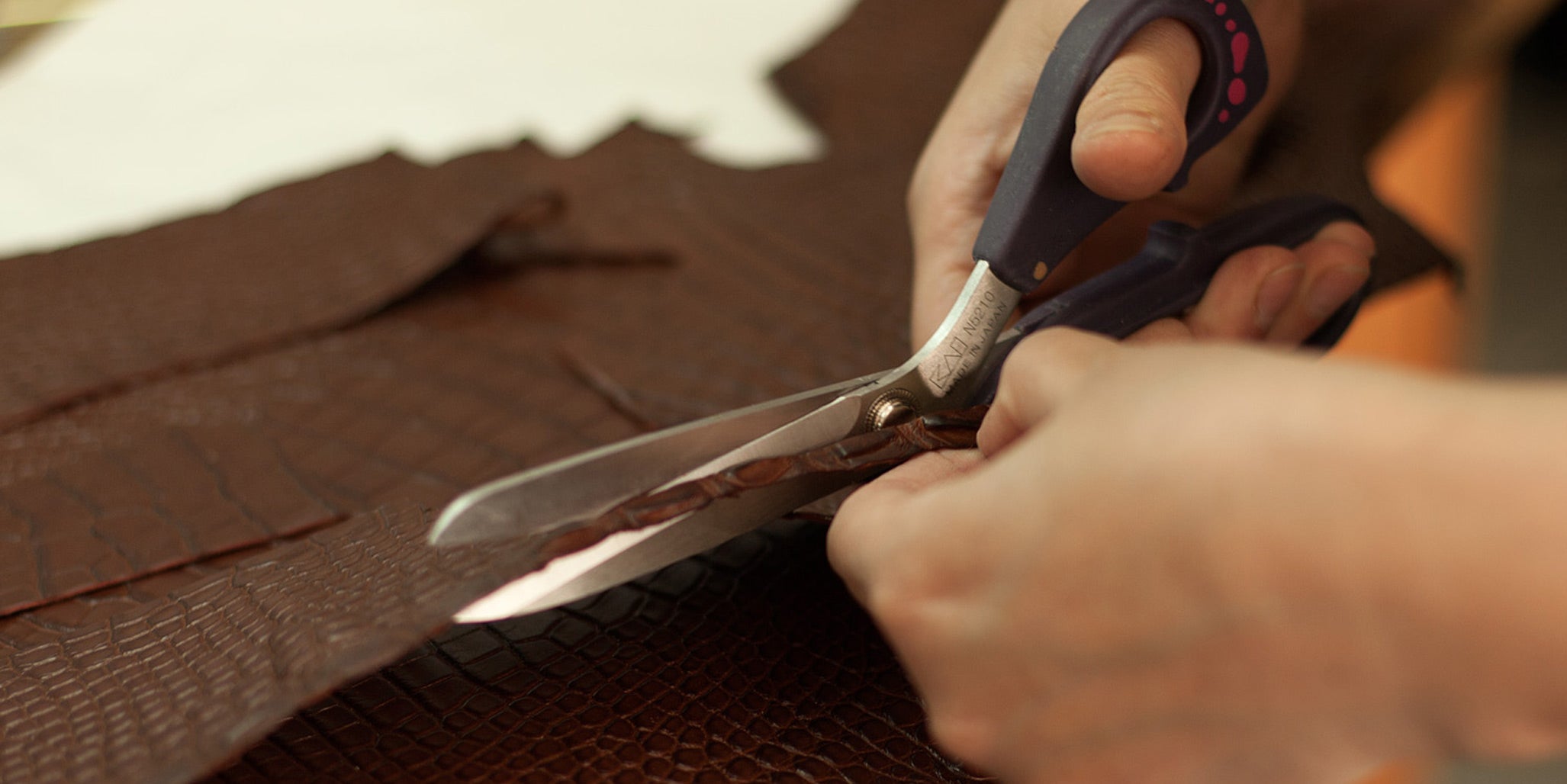
The first operation is splitting. It mechanically reduces the thickness of the leather, evenly across its surface.
For our Sully goat cases, we bring the leather down to 0.7–0.8 mm, against 1.1–1.3 mm on delivery.
This precision is not just about lightness. Leather thinned unevenly can create extra bulk, tension during assembly, or spoil the clean look of the finished product.
Our aim is a thickness suited to the structure of the case, while keeping the body and the visual quality of the grain side, the outer surface of the leather.
Splitting therefore needs a sufficiently even material and a precise machine setting. A few tenths of a millimetre make a real difference.
Skiving and turned edges: why edges matter so much
After splitting comes another essential operation: skiving.
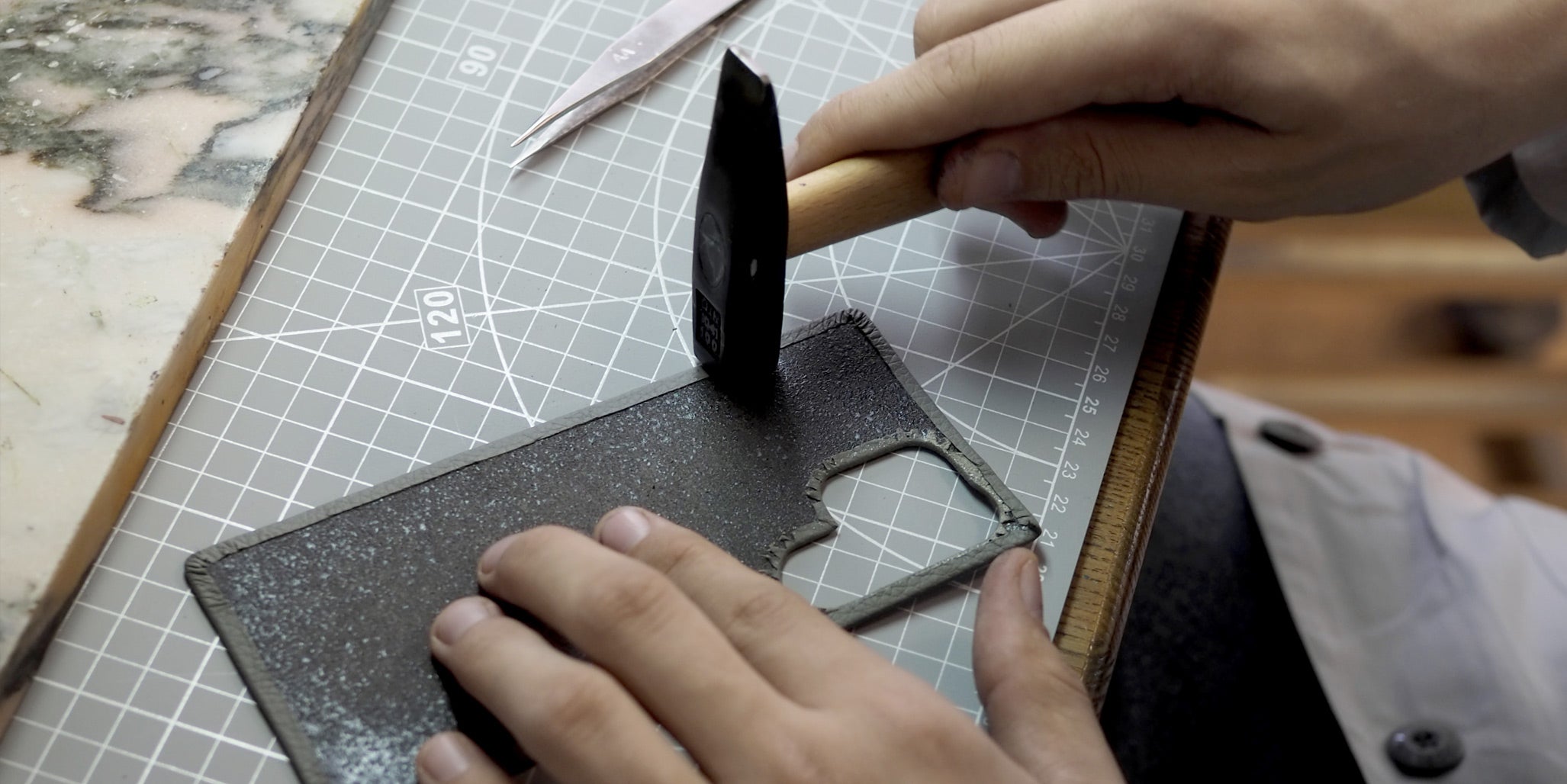
With a skiving machine, we thin the edges of the leather locally to 0.3–0.4 mm. The rest of the piece keeps its working thickness.
Why the difference? Because the edges have to be folded inwards. Without this thinning, the material would form a ridge that is too thick, especially visible at the corners.
We use a turned-edge construction: the edge of the leather is folded inwards instead of being left cut and then painted.
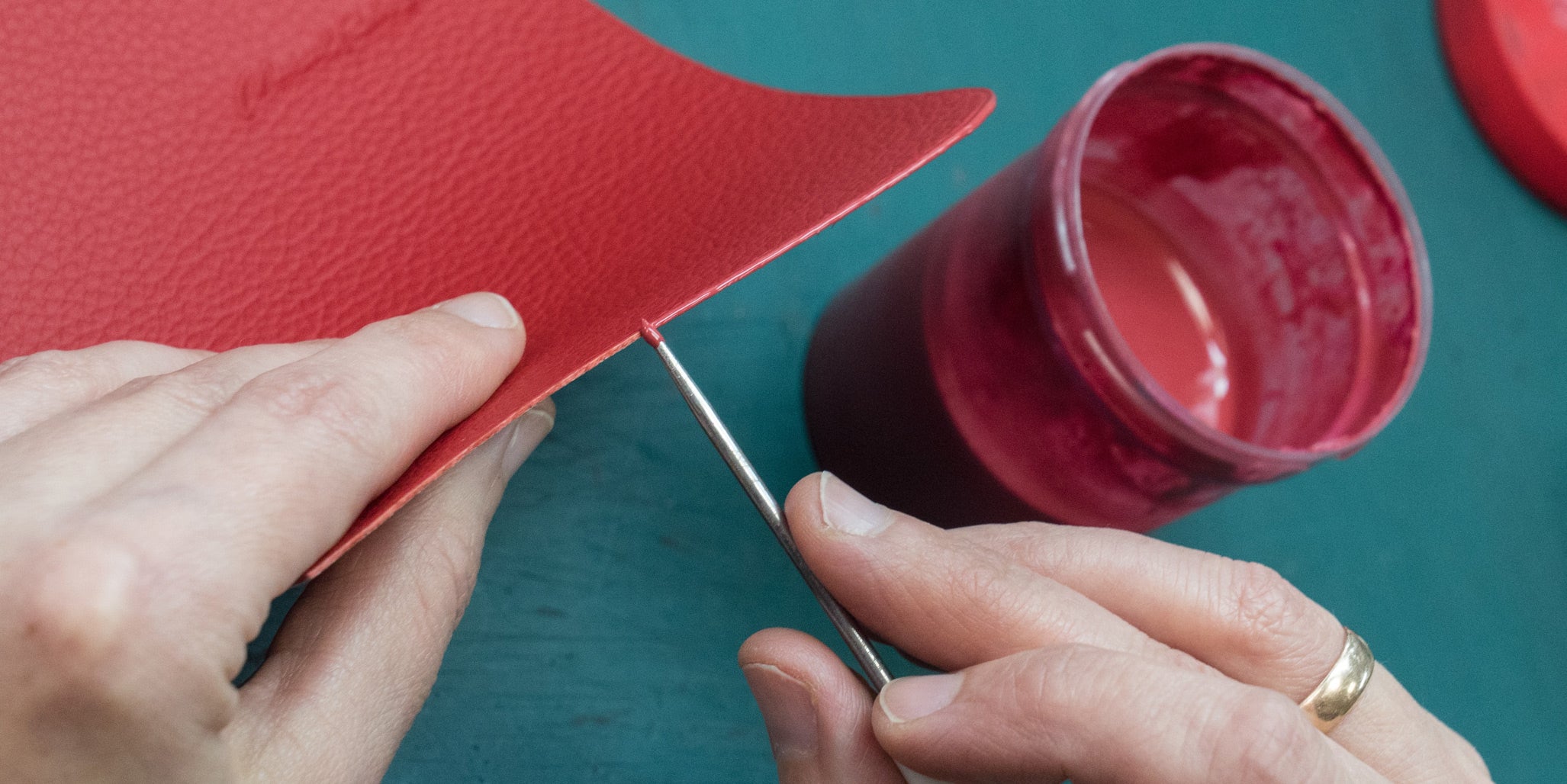
A carefully cut and painted edge is a fine leatherworking technique. But for a case that constantly rubs against a pocket or a bag, I prefer the grain side of the leather to carry on over the edge of the piece.
A turned edge does not rule out all wear, but the edge stays leather, without depending on a layer of edge paint.
For a case that goes in and out of a pocket or bag all day, that difference counts.
Goat or calfskin: which should you choose?
We work both materials in the atelier, because each has its qualities.
Full-grain calfskin is valued for its suppleness, the fineness its surface can reach and the variety of its finishes. Depending on the skins and treatments, it can offer a very soft touch and great elegance.
Goat leather, and Sully in particular, has a more distinctive grain and a firm hand that interest us for thin pieces that must keep their shape.
It would be wrong, though, to claim that goat is always stronger than calf, or that calf is always more supple. These properties depend on the selection of skins, their thickness, the tanning and the finish.
In our trade, the choice is not made from an abstract ranking of materials. It depends on what we want to make.
For a smartphone case, the question is simple: which leather will give the best balance of thinness, body, touch and quality of finish?
How does leather react to daily contact with hands?
A phone case is a particular object: it spends much of the day in contact with hands.
And hands are never completely dry. Sweat contains water, salts and various substances whose composition varies from one person to another.
Fresh sweat is generally slightly acidic, but its pH can change over time. Sweat residue, moisture and friction can all help alter the look of a leather or its finish.
That is why the colour fastness of leather to perspiration is covered by an international standard, ISO 11641:2025: the leather is tested in contact with artificial sweat.
On a case, the most stressed areas are usually where the fingers rest, the corners, and the places where the phone rubs against clothing.
A pigmented finish like Sully's offers useful surface protection. It does not prevent all change in the material, however: depending on use, some areas may become shinier, mark, or change slightly in appearance.
This normal evolution should be distinguished from excessive wear or a finishing defect.
A slim case, designed to be used
The quality of a case is not judged only by the beauty of the skin before cutting. It shows in the evenness of its thickness, the care given to the edges, the precision of assembly and how it behaves after several months of use.

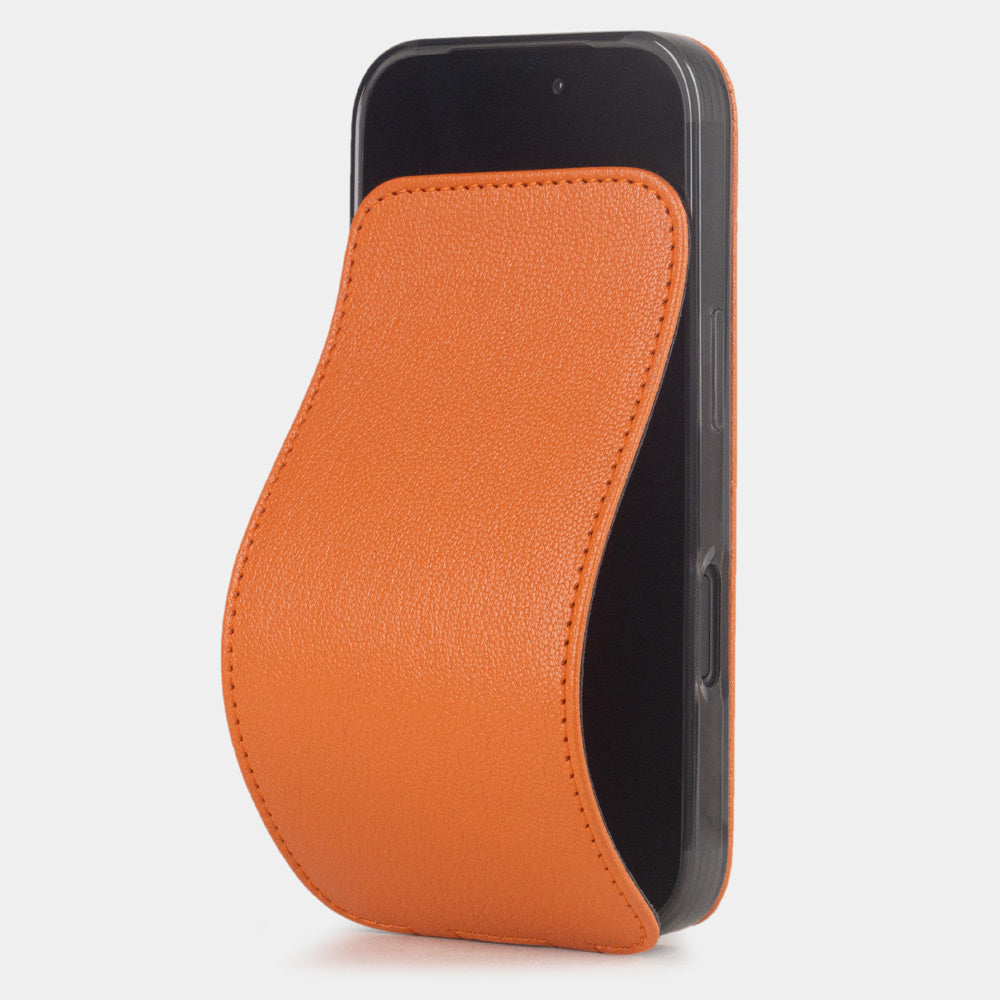
Our magnetic flip case in Sully goat for iPhone 18 Pro and iPhone 17 Pro weighs about 80 grams and adds less than 2 mm of thickness.
It combines Alran goat leather with our slim structure, a soft flap that attaches magnetically to the back of the phone, an Alcantara® lining and MagSafe compatibility.

The mégisserie's work and the leatherworker's are different, but complementary. Alran prepares a leather whose qualities we value. Our responsibility is then to transform it without losing the qualities we chose it for.
That is how we see leather goods at Marcel Robert: start from a fine material, then give it a precise function without imposing needless thickness.
Discover our magnetic flip case in Sully goat leather: case for iPhone 18 Pro and iPhone 17 Pro.
Frequently asked questions
Is goat leather durable?
Yes, a well-selected and properly worked goat skin can be very durable for small leather goods. Its durability also depends on the tanning, the finish and the construction of the object.
Why thin the leather before making a case?
Splitting gives an even thickness suited to the product. At Marcel Robert, Sully is brought down to 0.7–0.8 mm, then its edges are skived to 0.3–0.4 mm so they can be folded.
Does goat leather develop a patina?
Yes, but how it evolves depends strongly on the finish. A pigmented leather like Sully does not change in the same way as an aniline leather. Friction, contact with hands and care all influence its appearance over time.
How do you care for a goat leather case?
Wipe it regularly with a soft, dry cloth. Avoid prolonged exposure to water, heat and harsh products. For deeper cleaning, use only a method compatible with its pigmented finish.
Hervé Le Dévéhat — Founder of Marcel Robert, specialist in leather goods and leather accessories.